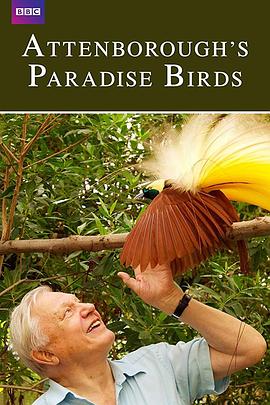
Birds of paradise are one of David Attenborough's lifelong passions. He was the first to film many of their beautiful and often bizarre displays, and over his lifetime he has tracked them all over the jungles of New Guinea. In this very personal film, he uncovers the remarkable story of how these 'birds from paradise' have captivated explorers, naturalists, artists, film-makers and even royalty. He explores the myths surrounding their discovery 500 years ago, the latest extraordinary behaviour captured on camera and reveals the scientific truth behind their beauty: the evolution of their spectacular appearance has in fact been driven by sex.
And in a final contemporary twist to this story of obsession and royalty, he travels to the desert of Qatar, to a state-of-the-art facility which houses the largest breeding group of these birds in the world - a sheikh's very own private collection. There he has his closest ever encounter with a greater bird of paradise and its dramatic display, reliving the experience that captivated him in the forests of New Guinea more than 50 years ago.
'For me birds of paradise are the most romantic and glamorous birds in the world. And this is a film I have wanted to make for 40 years.' - Sir David Attenborough.
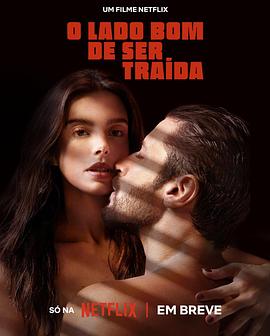
Babi discovers a betrayal by her long-term partner and decides to embark on a new adventure in life. On this journey, she meets judge Marco and they begin to live a story permeated by a lot of sexual tension.
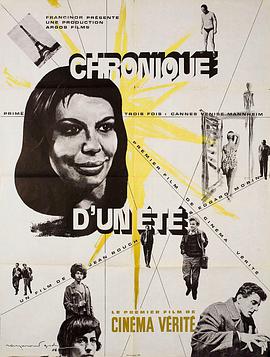
1960年的夏天,社会学家埃德加·莫兰和让·鲁什对巴黎年轻人的日常生活进行调查,了解他们对幸福的理解。这部论述电影连续几个月跟踪调查的进行,也记录了主人公们的变化。调查中被采访的人最后在影片第一次放映的时候聚集在一起观看进行讨论,有人的赞同,有的人驳斥。两位导演通过这部真实电影,经历了既极具挑战又充满乐趣的体验。
"In the summer of 1960, Jean Rouch and Edgar Morin investigated the everyday life of people living in Paris. ""Are you happy? How do you live?"" These are some of questions they asked young people on the street in an attempt to understand their idea of happiness.
From manual labourers, students, to a couple of office workers, the different protagonists reveal themselves in conversation, unconcerned about the presence of the camera. With no script, and no professional actors, this film sets out to frame the limits of cinematographic truth."
1961 戛纳国际电影节 国际影评人奖